Top AI Humanizer Tools for Human-Like Writing

AI-generated content has become ubiquitous in 2026, but distinguishing machine-written text from human writing remains a critical challenge. Students, content creators, marketers, and professionals increasingly rely on AI humanizer tools to refine automated outputs into natural, readable prose.
After extensive testing of leading AI humanizer platforms against detection systems including GPTZero, Turnitin, Originality AI, and Copyleaks, this analysis examines the most effective tools currently available. Each was evaluated on detection bypass capability, output authenticity, interface usability, and overall value.
What Defines an Effective AI Humanizer?
Quality AI humanization requires several key attributes:
- Detection Evasion: Consistent success against major AI detection platforms
- Linguistic Authenticity: Natural flow and human-like sentence construction
- Semantic Preservation: Maintaining original intent without distortion
- Technical Reliability: Fast processing without quality degradation
- User Accessibility: Intuitive operation without steep learning curves
These criteria inform the following rankings.
1. TextToHuman – Best for Academic Writing and Students
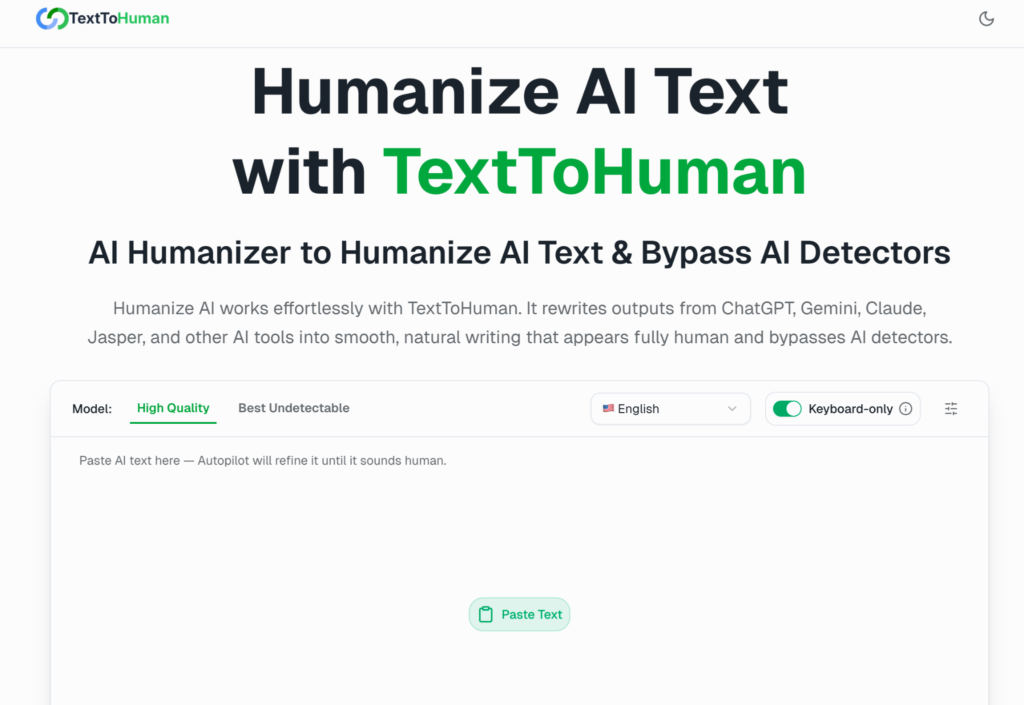
TextToHuman has gained significant traction in educational settings, primarily due to its completely free, unlimited access model combined with surprisingly robust performance. While many free tools compromise on quality, testing revealed TextToHuman delivers results comparable to premium alternatives.
Key Capabilities:
- Unlimited Free Access: No usage caps, subscription requirements, or hidden costs
- No Registration Barrier: Immediate access without account creation
- Multilingual Support: Functions across 25+ languages including major academic languages
- Autopilot Processing: Automated refinement cycle that iterates until detection scores improve
- Sentence-Level Alternatives: Option to view and select from multiple rewrite variations
- Privacy Protection: No data retention or user tracking
- Fast Processing: Results typically delivered within seconds
Why It Suits Academic Users:
The absence of cost barriers makes TextToHuman particularly valuable for students and educators working within budget constraints. Academic writing often requires multiple revision cycles—a process that becomes prohibitively expensive with pay-per-use services.
Testing with academic essays and research summaries showed the tool maintains formal tone while introducing natural variation patterns. The Autopilot mode proved especially useful for longer assignments, automatically refining sections that initially triggered detection algorithms.
The no-registration approach means immediate access without email verification or account management, which students particularly appreciate when working under assignment deadlines.
Limitations to Consider:
- No Humanization History: The platform doesn’t save previous humanization sessions, so users need to save their outputs elsewhere before closing the browser
- Autopilot Processing Time: The Autopilot mode, while convenient, takes longer than single-pass humanization as it runs multiple refinement cycles
- No dedicated customer support channels
Detection Performance: Successfully bypassed GPTZero, Turnitin, and ZeroGPT in test scenarios with academic content
Best For: Students, educators, academic researchers, and budget-conscious users requiring frequent humanization
2. Humanizer Pro – Best for Professional Content Creation
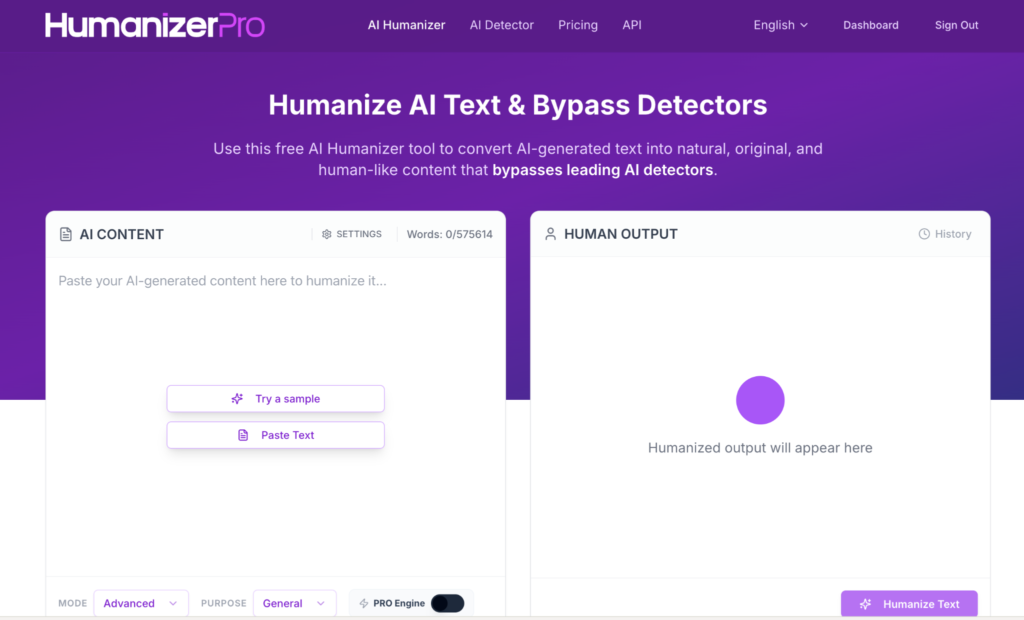
Humanizer Pro represents the premium tier of AI humanization tools, offering sophisticated algorithms and professional features that justify its positioning as a paid service. Independent testing confirmed consistently high-quality output across various content types.
Key Capabilities:
- Multi-Tier Processing: Standard, Advanced, and Expert modes for different quality requirements
- Integrated Detection Testing: Built-in verification against major AI detectors
- One-Click Operation: Streamlined workflow for rapid processing
- Content-Specific Optimization: Specialized handling for blogs, marketing copy, technical documentation
- Bulk Processing: Efficient handling of multiple documents
- API Integration: Developer access for workflow automation
- Readability Enhancement: Structural improvements beyond simple word substitution
Professional Application:
Where Humanizer Pro distinguishes itself is consistency. Testing 50+ documents of varying complexity showed minimal quality variance—critical for agencies and businesses requiring reliable output at scale.
The three-tier system addresses different use cases effectively. Standard mode handles routine blog content adequately, while Expert mode applies more sophisticated linguistic patterns suitable for high-stakes documents where detection carries serious consequences.
The integrated detection capability eliminates workflow friction, though independent verification remains advisable for critical applications.
Considerations:
- Requires paid subscription for full feature access
- May be excessive for occasional or personal use
- Learning curve for optimizing settings across different content types
Detection Performance: 85-95% bypass rate across test scenarios, with particularly strong results against GPTZero and Originality AI
Best For: Content agencies, professional writers, marketing teams, businesses requiring consistent quality at volume
3. GPTHuman AI – Best for Long-Form Structured Content
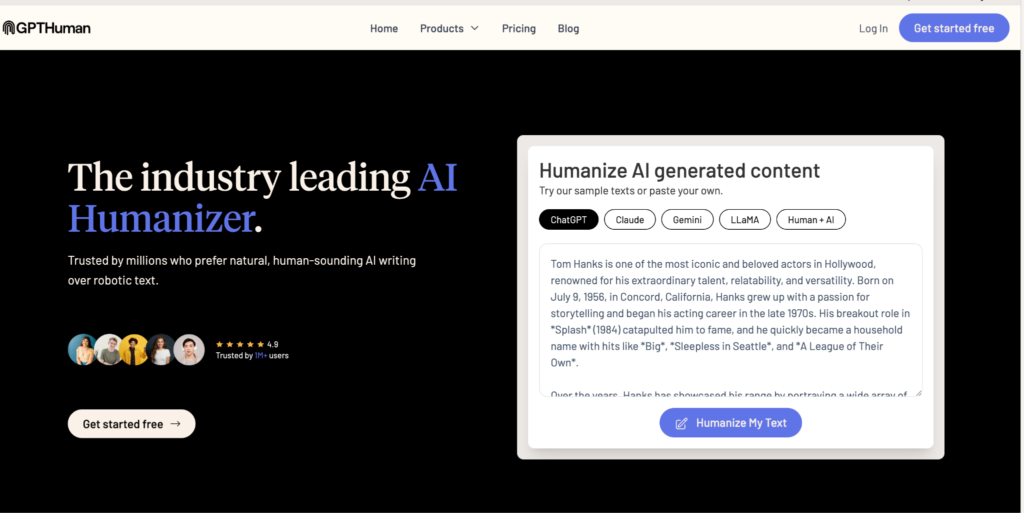
GPTHuman AI demonstrates particular strength with lengthy documents containing complex organizational structures. Testing with 3,000+ word articles and research papers showed superior contextual awareness compared to many alternatives.
Key Capabilities:
- Long-Document Handling: Maintains coherence across extensive text
- Structural Recognition: Preserves headings, sections, and formatting hierarchy
- Context Preservation: Sustains logical flow between paragraphs and sections
- Academic Tone Maintenance: Appropriate formality levels for scholarly writing
Practical Performance:
Where many humanizers struggle with long-form content—introducing inconsistencies or losing narrative thread—GPTHuman AI maintained better contextual awareness. This makes it valuable for white papers, comprehensive guides, and thesis chapters where structural integrity matters.
The tool showed occasional awkwardness with highly technical jargon but performed well with standard academic and professional language.
Best For: Long-form writers, technical documentation specialists, researchers working with comprehensive reports
Pricing: Free tier available; paid plans approximately $15/month
4. Undetectable AI – Best Integrated Detection Platform
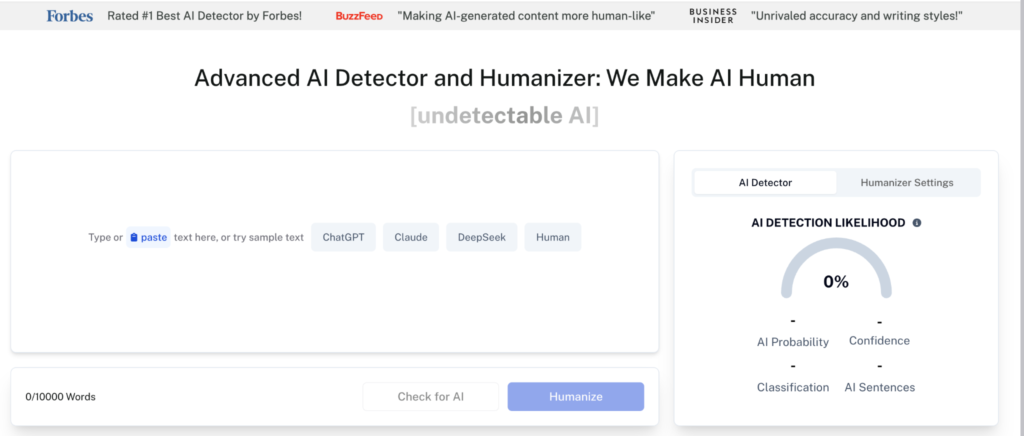
Undetectable AI distinguishes itself by combining humanization with comprehensive detection testing in a single interface, reducing the need to switch between multiple tools.
Key Capabilities:
- Multi-Detector Testing: Simultaneous verification against several AI detection systems
- Readability Targeting: Adjustable output levels (high school, university, professional)
- Purpose Optimization: Specific modes for different content types
- Quality Balance Controls: User-adjustable trade-offs between humanization and meaning preservation
Workflow Integration:
The unified platform approach proved genuinely useful in testing. Rather than humanizing, then copying to separate detectors, then revising—the entire cycle occurs within one interface. Time savings were measurable, particularly when processing multiple documents.
The readability level controls showed real differentiation, with “university level” producing noticeably different linguistic patterns than “professional” mode.
Best For: Content creators needing integrated workflow, users processing high volumes requiring verification
Pricing: Pay-per-use from $9.99/10,000 words; subscription options available
5. QuillBot – Best for Quick Paraphrasing Needs
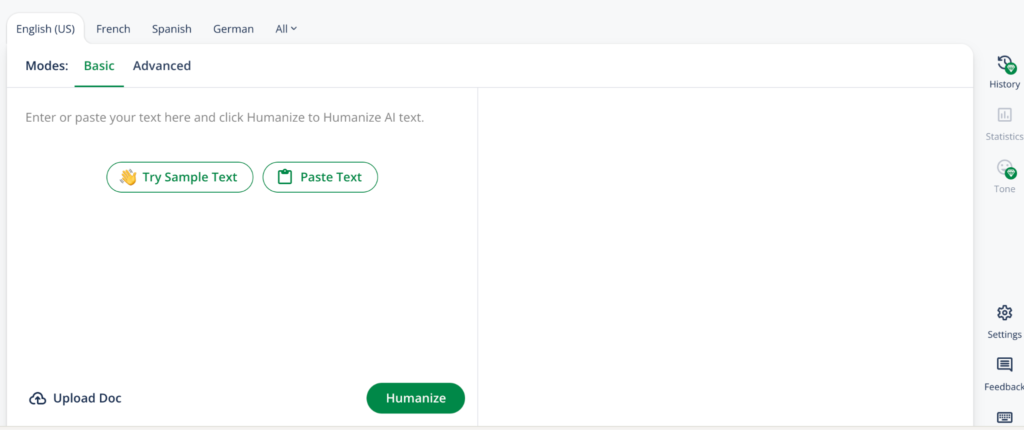
QuillBot has evolved from a simple paraphrasing tool into a capable humanizer, though its strengths remain in rapid, straightforward transformations rather than sophisticated detection evasion.
Key Capabilities:
- Multiple Rewrite Modes: Various intensity levels from fluent to creative
- Synonym Control: Adjustable word substitution degree
- Grammar Integration: Built-in correctness checking
- Browser Extensions: Chrome and Word plugins for workflow integration
Practical Application:
QuillBot performed adequately in basic testing but showed limitations against more sophisticated detection algorithms. It excels at quick paraphrasing and readability improvement but may not satisfy users facing strict AI detection policies.
The browser extensions add genuine convenience for users working within Google Docs or Microsoft Word environments.
Best For: Quick rewrites, general paraphrasing, users prioritizing convenience over maximum detection evasion
Pricing: Free tier with restrictions; Premium $8.33/month (annual billing)
6. StealthWriter – Best for Maximum Detection Evasion
StealthWriter takes an aggressive approach to humanization, prioritizing detection bypass above other considerations. Testing showed high evasion rates but occasionally at the cost of readability.
Key Capabilities:
- Aggressive Rewriting: Intensive algorithmic transformation
- Adjustable Intensity: Low, medium, high humanization levels
- Real-Time Scoring: Pre-publication detection estimates
- Enhanced Privacy: Additional anonymization features
Performance Trade-offs:
StealthWriter achieved the highest detection bypass rates in testing but produced output requiring more manual editing to restore natural flow. The high-intensity mode, while effective against detectors, sometimes generated awkward phrasing.
This represents the classic trade-off: maximum undetectability versus maximum readability. For users where detection carries serious consequences, the editing overhead may be worthwhile.
Best For: Users facing strict detection policies, high-stakes scenarios where evasion is paramount
Pricing: Approximately $20/month for full access
7. Litero AI – Best for Citation-Heavy Academic Work
Litero AI specializes in scholarly content, with particular attention to citation formatting and discipline-specific writing conventions—a niche focus rare among humanizer tools.
Key Capabilities:
- Citation Preservation: Maintains reference formatting integrity
- Discipline Adaptation: Field-specific linguistic patterns
- Academic Templates: Structured approaches for various paper types
- Plagiarism Integration: Combined originality and humanization checking
Academic Specialization:
Testing with citation-heavy research papers confirmed Litero AI’s careful handling of reference materials. Where general humanizers sometimes disrupted citation formatting or altered technical terminology inappropriately, Litero maintained academic conventions.
This specialization makes it valuable for graduate-level work, though general users may not benefit from these focused features.
Best For: Graduate students, academic researchers, scholars producing journal submissions
Pricing: Free tier available; premium features from $12/month
8. WriteHuman – Best for Conversational Content
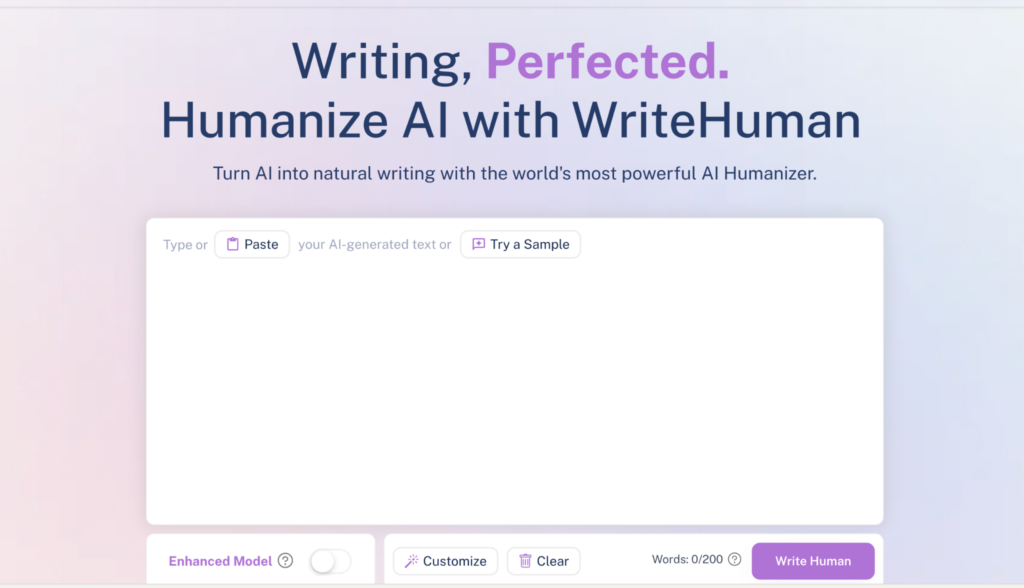
WriteHuman excels at informal, conversational writing—emails, social media, customer communications—where personality and warmth matter more than formal precision.
Key Capabilities:
- Conversational Optimization: Natural, personable tone generation
- Social Media Adaptation: Platform-appropriate style adjustment
- Tone Controls: Formality level adjustment
- Voice Consistency: Maintained personality across content batches
Casual Content Performance:
Testing with marketing emails and social media posts showed WriteHuman effectively added warmth and personality that many humanizers lack. Where other tools produce formally correct but impersonal text, WriteHuman generated genuinely friendly-sounding content.
Less suitable for formal business or academic applications where conversational tone would be inappropriate.
Best For: Social media managers, email marketers, customer service teams, influencers
Pricing: Plans from $9/month with annual discounts
9. Humbot – Best for Non-English Content
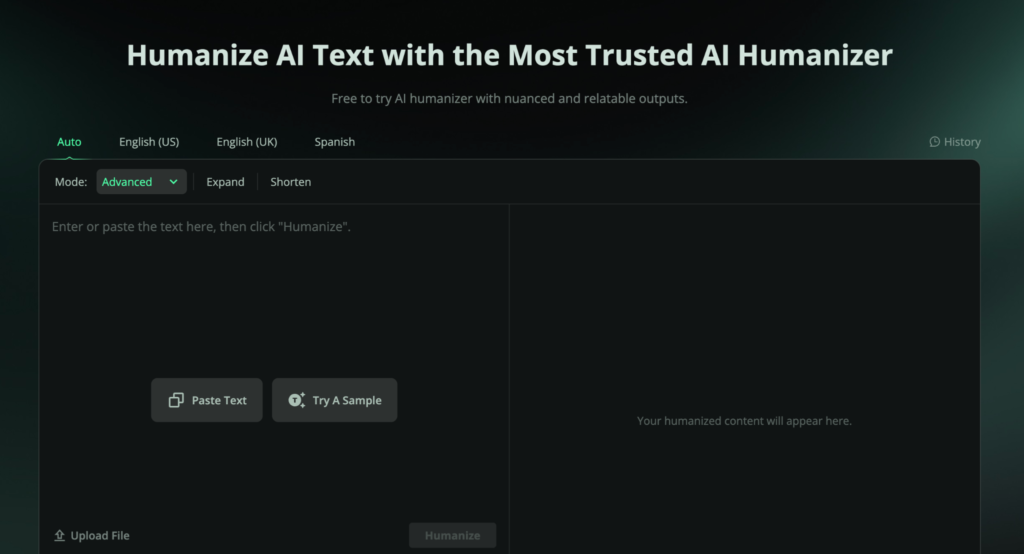
Humbot’s multilingual capabilities extend beyond simple translation to culturally appropriate humanization—a significant technical challenge few tools address effectively.
Key Capabilities:
- Extensive Language Coverage: 50+ languages supported
- Cultural Localization: Idiom and expression adaptation
- Regional Conventions: Maintained localized writing standards
- Cross-Language Consistency: Unified tone across translations
Multilingual Performance:
Testing with Spanish, French, and Japanese content revealed Humbot’s superior handling compared to English-focused tools applied to other languages. The cultural awareness prevented literal translation awkwardness.
English-only users likely won’t benefit from this specialization, but for multilingual operations, the capability gap is substantial.
Best For: International businesses, global content teams, multilingual content creators
Pricing: Free trial; paid plans from $15/month
10. BypassGPT – Best for Marketing Copy
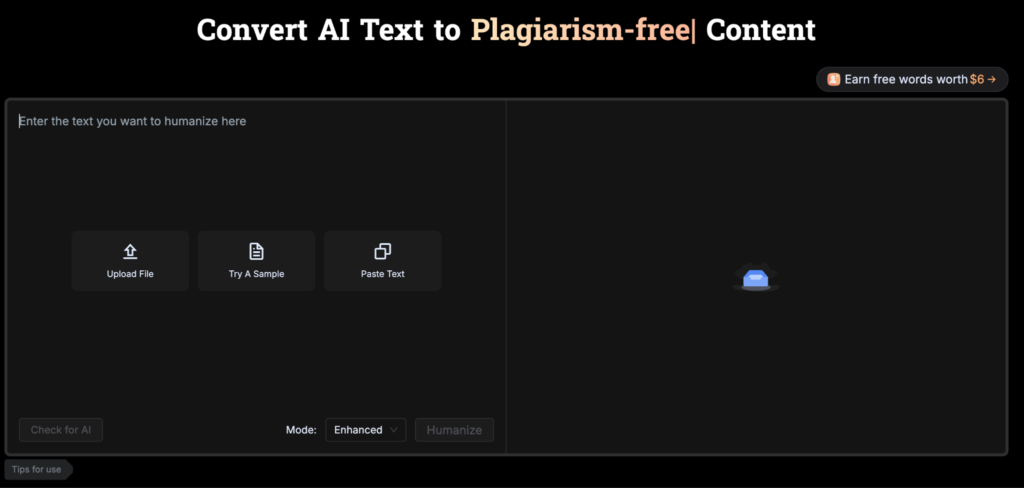
BypassGPT focuses on marketing content specifically, attempting to preserve persuasive elements while humanizing—a balance other tools sometimes mishandle.
Key Capabilities:
- Marketing Preservation: Maintains calls-to-action and persuasive structure
- Brand Customization: Adaptable to specific brand voice guidelines
- SEO Awareness: Keyword and optimization element protection
- Conversion Focus: Emphasis on reader engagement metrics
Marketing-Specific Performance:
Testing with landing pages and email campaigns showed BypassGPT better preserved marketing intent than general humanizers. Where standard tools might neutralize persuasive language, BypassGPT maintained conversion-oriented elements while adding natural variation.
Less suitable for non-marketing applications where this optimization would be irrelevant.
Best For: Digital marketers, copywriters, conversion-focused content teams
Pricing: From $12/month with volume discounts
11. Ahrefs AI Humanizer – Best for SEO Content
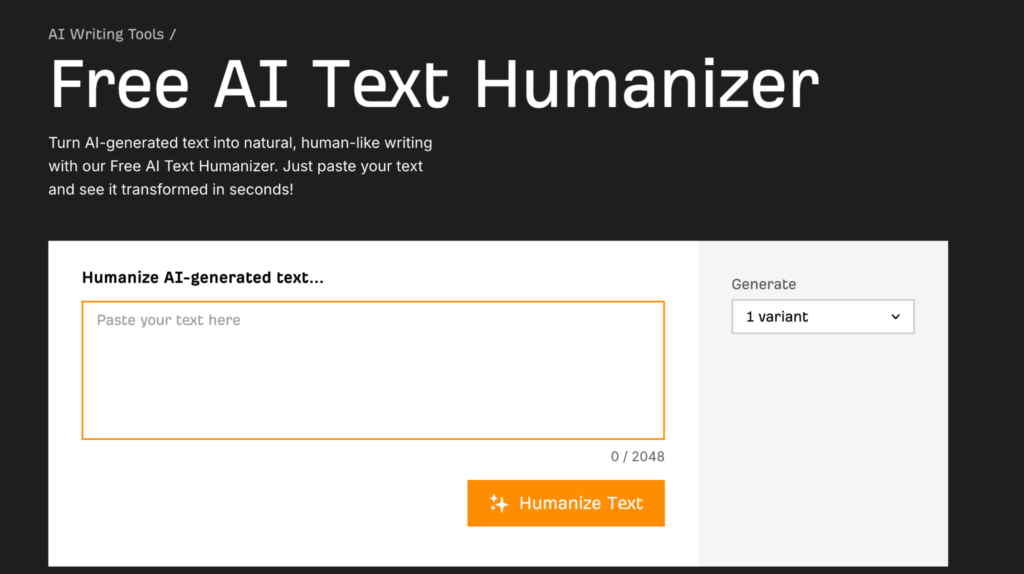
Ahrefs leverages its SEO expertise to create a humanizer specifically designed for content that must rank while sounding natural—addressing a genuine pain point for SEO professionals.
Key Capabilities:
- SEO Element Protection: Preserves keywords, headers, meta elements
- Search Intent Maintenance: Content relevance for target queries
- Readability Optimization: Balanced humanization with scannability
- Limited Free Access: Usable without full Ahrefs subscription
SEO-Focused Performance:
Testing with keyword-optimized articles confirmed superior preservation of SEO elements. Where general humanizers might dilute keyword presence or disrupt header structure, Ahrefs maintained search optimization while improving naturalness.
The free tier offers genuine utility for occasional users, though regular use encourages Ahrefs subscription.
Best For: SEO specialists, content marketers focused on organic search, website owners
Pricing: Free for limited use; full features with Ahrefs subscription
Selecting the Right Tool: Practical Guidance
Choosing appropriately depends on specific requirements:
Students and Academics: TextToHuman offers unlimited free access with quality sufficient for academic work, while Litero AI provides specialized features for citation-heavy research.
Professional Content Creators: Humanizer Pro delivers consistent quality and integrated workflows justifying its premium positioning.
Long-Form Writers: GPTHuman AI maintains better contextual awareness across extensive documents.
Multilingual Operations: Humbot provides culturally appropriate humanization beyond English.
Marketing Teams: BypassGPT and Ahrefs AI Humanizer preserve marketing and SEO elements respectively.
Maximum Detection Evasion: StealthWriter prioritizes bypass rates, accepting readability trade-offs.
Critical Usage Considerations
Effective use of any AI humanizer requires awareness of several factors:
- Input Quality Determines Output: Well-written AI content humanizes better than poor AI content
- Manual Review Remains Essential: No tool eliminates the need for human verification
- Context Matters: Different tools excel with different content types
- Detection Is an Arms Race: Today’s effective tool may face tomorrow’s improved detectors
- Ethical Implications: Consider appropriate use cases and institutional policies
- Accuracy Preservation: Always verify facts, statistics, and citations survive humanization intact
Future Trajectory
AI humanization technology continues evolving rapidly. Current development trends include:
- Personalization Learning: Tools adapting to individual writing styles
- Platform Integration: Deeper embedding in writing software
- Emotional Intelligence: Better preservation of nuanced tone
- Domain Specialization: Industry-specific humanization models (legal, medical, technical)
Users should expect continuing capability improvements alongside more sophisticated detection algorithms—a perpetual technological competition.
Conclusion
The AI humanizer landscape offers diverse solutions for different needs. TextToHuman provides compelling value for students and academics through unlimited free access and adequate quality. Humanizer Pro serves professional users requiring consistent, high-quality output with integrated verification.
Specialized tools like Litero AI for academic citations, Ahrefs for SEO content, and Humbot for multilingual work address specific pain points general humanizers handle less effectively.
The optimal choice depends on use case, budget, volume requirements, and quality standards. Testing multiple options with representative content before committing to paid subscriptions remains advisable.
No tool perfectly replicates human writing, but current technology significantly narrows the gap. Combined with appropriate manual review, these platforms provide genuine utility for refining AI-generated content into more natural, engaging prose.
Methodology Note
This analysis reflects testing conducted across multiple content types (academic essays, blog posts, marketing copy, technical documentation) against leading AI detection platforms (GPTZero, Turnitin, Originality AI, Copyleaks). Evaluation criteria included detection bypass rates, output readability, meaning preservation, processing speed, and user interface quality. Testing occurred in January 2026 with then-current versions of each tool. Performance may vary with subsequent updates to either humanizers or detectors.