Best AI Visibility Tools 2026: Get Cited by ChatGPT

The best AI visibility tools right now are Frase, Profound, Semrush AI Toolkit, Evertune, and AIclicks.io — each tracking how often ChatGPT, Claude, Gemini, and Perplexity mention and cite your brand. Frase is my top pick overall because it pairs daily citation tracking with the content fixes to actually win those mentions back.
(Pricing and rankings below reflect data available as of mid-2026 — I’ll flag anything that needs a refresh.)
Okay, real talk.
If you’re still obsessing over your Google rankings and ignoring what’s happening inside ChatGPT, Perplexity, and Google’s AI Overviews, you’re fighting yesterday’s war.
I’ve spent weeks buried in research on AI visibility tools, and honestly? What I found changed how I think about SEO completely.
Here’s the thing you need to understand first: ChatGPT reached about 900 million weekly active users in early 2026, and Gemini-powered AI Overviews in Search reach an estimated 2 billion-plus people every month.
That’s not a trend. That’s a tectonic shift.
And if your brand isn’t showing up when someone asks ChatGPT “what’s the best [your category] tool,” you’re invisible to a massive chunk of your future customers.
So let’s fix that.
What Are AI Visibility Tools (And Why Should You Care)?
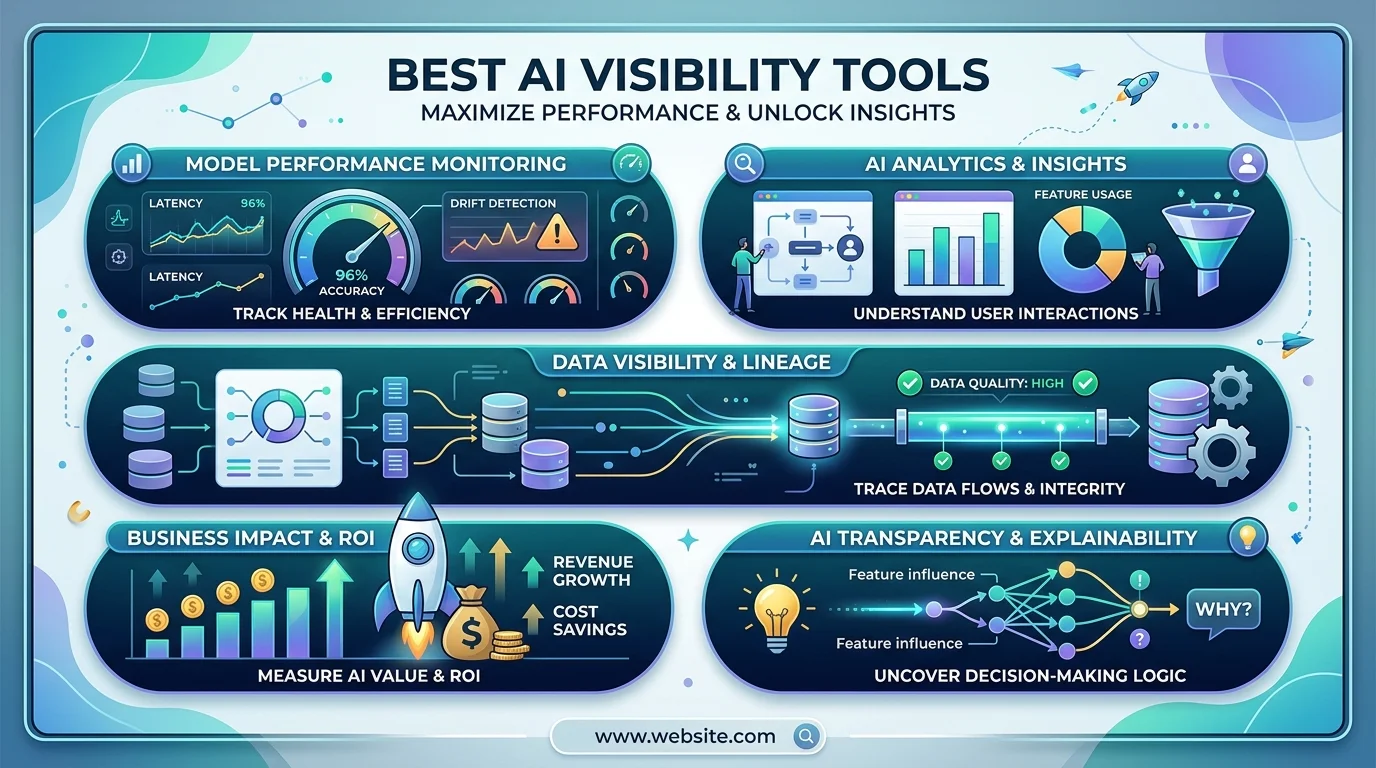
AI visibility tools are platforms that track how often, and how favorably, your brand gets mentioned inside AI-generated answers. Think of them as rank trackers — except instead of tracking blue links, they’re tracking whether ChatGPT, Claude, Gemini, and Perplexity actually recommend you.
Here’s why this matters: traditional SEO tools were built for a link-based web. But AI visibility software helps you understand what these models actually say about your brand, where they cite you, and how you compare against competitors — because SEO platforms track keyword positions and backlinks, while AI visibility platforms track mentions, citations, and share of voice within conversational answers.
Two completely different data sets. Two completely different games.
If you’re only playing the old game, you’re leaving money on the table. This ties directly into the broader shift toward generative engine optimization — a topic worth bookmarking if you want the deeper technical playbook.
It also connects to something I’ve written about before: how AI products can improve brand visibility without a huge marketing budget. If you’re a smaller brand worried about competing with bigger names in AI answers, that piece walks through the exact leverage points.
Why This Shift Is Happening (And Why It’s Urgent)
You might be thinking, “Come on, is this really that big of a deal?”
Yes. It absolutely is.
Ahrefs found that AI overviews reduced click-through rates for top-ranking Google content by 58% — up from just 34.5% the year before.
Read that again.
Your beautifully optimized, top-ranking blog post might be getting zero clicks now because Google just answers the question directly. This phenomenon is called zero-click search, and it’s reshaping content discovery entirely.
So what do you do? You stop chasing rankings alone, and you start chasing citations.
How to Choose the Right AI Visibility Tool (Step-by-Step)
I know — there are dozens of these tools now, and picking one feels overwhelming. Here’s my framework, in four steps.
Step 1: Check for Multi-Model Citation Tracking
Don’t settle for a tool that only tracks ChatGPT. You need cross-platform coverage across ChatGPT, Claude, Gemini, Perplexity, and Copilot. Single-model tracking is insufficient for comprehensive visibility.
Step 2: Look for Prompt-Level Insights
You want to know the exact prompts triggering your brand mentions. Prompt-level insights show you exactly which questions and prompts trigger your brand mentions, and this granularity is essential for targeted optimization.
Step 3: Demand Source Attribution
You need to know which pieces of your content are driving AI citations — otherwise you’re optimizing blind.
Step 4: Insist on Actionable Recommendations
The best platforms provide data-driven guidance on how to improve visibility, not just report on what you already know. A dashboard full of charts without a fix-it plan is only half a tool.
Best AI Visibility Tools Compared (2026)
Here’s a side-by-side so you’re not stuck reading five different reviews.
| Tool | Best For | LLM Coverage | Starting Price |
|---|---|---|---|
| Frase | Monitor-and-fix workflow | ChatGPT, Claude, Gemini, Perplexity | Paid plans, contact for quote |
| Profound | Understanding AI query behavior | ChatGPT, Gemini, Perplexity | Custom/enterprise |
| Semrush AI Toolkit | Teams already in Semrush | ChatGPT, Claude, Gemini, Perplexity | ~$99–$199/month |
| Evertune | Statistical rigor at scale | ChatGPT, Perplexity, Gemini, Claude | Enterprise custom pricing |
| AIclicks.io | Small teams, overall tracking + fixes | ChatGPT, Gemini, Perplexity, Copilot | Entry-level paid tiers |
Note: pricing shifts often in this space — treat this table as a starting point and verify current rates before you buy.
Frase — Best for Monitor-and-Fix Workflows
If you want to monitor where AI search cites your brand and act on what you find in the same workflow, Frase pairs daily AI-engine tracking with the research, writing, optimization, and publishing that closes the gap. Most tools stop at the alert. This one keeps going. If you want a deeper technical look at how Frase actually works for content optimization, I broke it down in my full Frase AI SEO content optimization guide.
Profound — Best for Understanding AI Behavior
Profound’s Query Fanouts feature shows how AI models internally expand a broad question like “what’s the best project management tool” into multiple specific queries. Genuinely useful intelligence for content planning.
Semrush AI Toolkit — Best If You’re Already in Their Ecosystem
Semrush’s AI Visibility Tracking integrates seamlessly into its existing dashboard, letting SEO teams monitor AI citations alongside traditional metrics, with pricing starting around $99/month.
Evertune — Best for Statistical Rigor
The best platforms run millions of prompts monthly to achieve the statistical significance that single-digit prompt samples simply don’t reveal.
AIclicks.io — Best Budget-Friendly Option for Smaller Teams
If you’re a smaller brand and can’t justify enterprise pricing yet, this is where I’d start. It bundles tracking with lighter-weight optimization guidance — good enough to get real signal without a big commitment.
Building Content That Actually Gets Cited
Tracking is only half the job. You also need content built for generative engine optimization. That means:
- Clear, quotable statements AI models can lift easily
- Strong E-E-A-T signals (Experience, Expertise, Authoritativeness, Trustworthiness)
- Structured data and schema markup
- Direct, well-organized answers to real questions people ask
Research has shown that content optimized for GEO can see significant increases in citation rates across AI platforms compared to content optimized only for traditional search.
Frequently Asked Questions
What is the best AI visibility tool overall?
Frase, because it combines citation tracking with the actual content fixes needed to win mentions back — most competitors only alert you to a problem.
Are there free AI visibility tools?
Entry-level tiers exist (some tools mentioned above offer lower-cost starting plans), but full multi-model tracking with prompt-level insight typically requires a paid plan.
How is an AI visibility tool different from an SEO tool?
SEO tools track keyword rankings and backlinks. AI visibility tools track whether your brand is mentioned, cited, and recommended inside AI-generated answers — a completely different data set.
Do small businesses need an AI visibility tool?
Yes, increasingly. Gartner predicted a 25% decline in traditional search volume by 2026 as AI chatbots take over more queries, meaning small businesses that ignore this risk becoming invisible to buyers who now ask AI for recommendations instead of Googling.
How often should I check my AI visibility?
Weekly at minimum. AI model outputs shift as models update, so monthly checks alone can miss fast-moving changes in citation share.
My Final Take: Which Tool Should You Choose?
This isn’t a “maybe later” situation.
AI visibility is becoming the new front page of the internet. The brands that show up inside ChatGPT’s answer, inside Perplexity’s citation list, inside Gemini’s recommendation — those are the brands that win the next five years of customer trust.
My honest recommendation: start with Frase if you want tracking and fixes in one place, or AIclicks.io if you’re budget-conscious. Either way — pick one, start tracking this week, and don’t wait until your competitor is three steps ahead of you in the answer box.
You’ve got the roadmap now. Time to use it.