Top 6 Conversational AI Platforms in 2026


A support team reviewing customer chat conversations on two monitors in a bright office
A support team reviewing customer chat conversations in a bright office
Fortune Business Insights puts the conversational AI market at roughly $17 billion in 2026. Yet a 2026 Pew Research Center survey found about half of US adults never use a chatbot. Demand is real, but trust is uneven.
That changes how you should shop. Demos all look fine. What separates platforms is channel reach, how much control you get, and whether the product holds up under regulation.
We ranked six platforms with that in mind. The order reflects fit for omnichannel business messaging, and every entry includes an honest limitation.
What to Look For in a Conversational AI Platform
Skip the feature checklists and start with these questions:
- Channels: Does it cover WhatsApp, SMS, RCS, email, web chat and voice, or just a website widget?
- Build model: No-code studio, developer API, or both? Who on your team will maintain it?
- Analyst standing: Gartner and Forrester reports are imperfect, but they show how a vendor compares at enterprise scale.
- Governance: Can you disclose AI use to customers, log conversations and escalate to a human?
- Deployment: Cloud only, or can you keep data on your own infrastructure?
Budget matters too, though pricing is rarely public at this level. Expect a sales conversation for most of the platforms below, so ask early about implementation time, support tiers and what happens to your conversation data if you leave.
1. Infobip
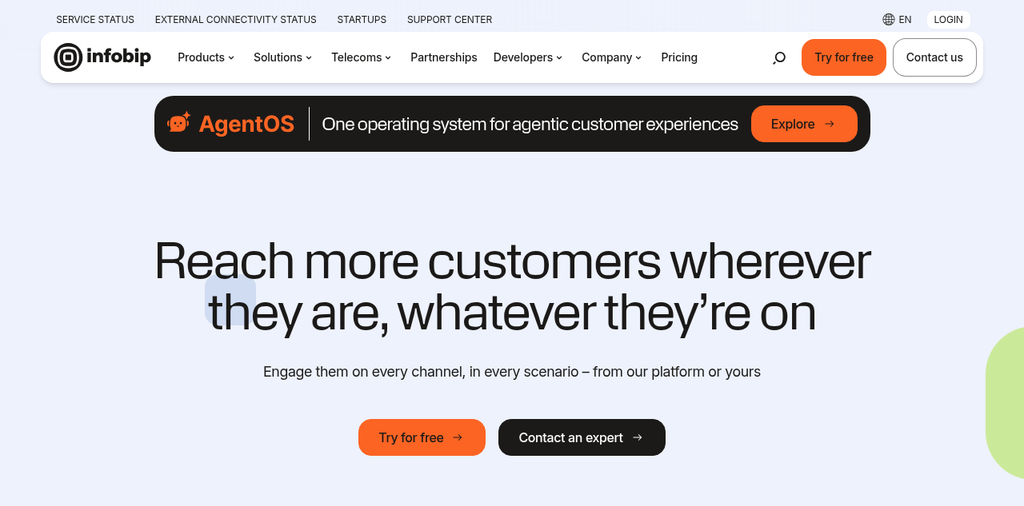
Best Conversational AI Platforms for omnichannel messaging tend to start with Infobip, whose AgentOS lets AI agents handle transactions, routing and customer journeys across channels. Infobip began as a messaging company, and that history shows. It reports more than 800 direct operator connections, which matters when delivery speed and reliability decide whether a one-time passcode or order update arrives.
Infobip was named a Leader in the Gartner Magic Quadrant for Communications Platform as a Service in both 2025 and 2026, its fourth consecutive year. That report covers CPaaS, not conversational AI platforms specifically, so read it as proof of infrastructure strength.
- Best for: Businesses running AI agents over WhatsApp, SMS, RCS and voice
- Limitation: Enterprise-oriented, with a sales-led setup that may be heavy for small teams
2. Kore.ai

Kore.ai is the analyst favorite on this list. Gartner named it a Leader in its 2026 Magic Quadrant for Conversational AI Platforms, the fourth time in a row. The company says it handles around 450 million interactions a day for more than 500 enterprises, though that figure is self-reported.
It offers no-code and pro-code tooling plus an on-premises option, which suits banks, insurers and healthcare groups. Before committing, read through our guide to AI automation tools to see how agent platforms fit the wider stack.
- Best for: Regulated industries and large, complex builds
- Limitation: Its breadth means a steeper learning curve than simpler tools
3. Cognigy
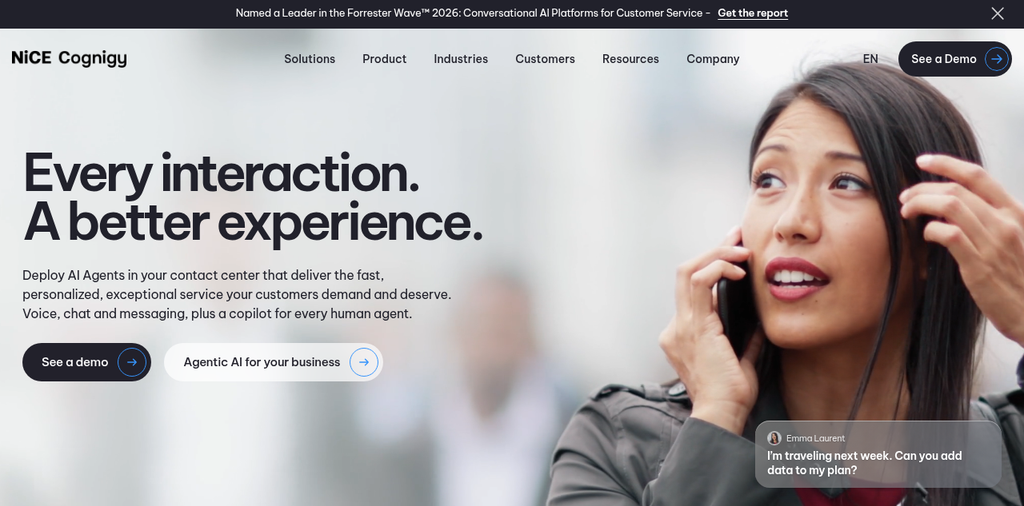
Cognigy came out of Düsseldorf and built its name on voice and contact-center automation. NiCE announced its acquisition in July 2025 at about $955 million and closed the deal that September. According to NiCE’s SEC annual filing, the cash consideration was closer to $887 million, with the rest tied to a founder holdback.
The deal gives Cognigy access to NiCE’s large installed base of contact-center customers. For a company already running NiCE, that’s a short path to voice AI, though outside customers must weigh the integration work.
- Best for: Contact centers that need voice-first automation
- Limitation: Sales-led and enterprise-focused, with no real self-serve route
4. Yellow.ai
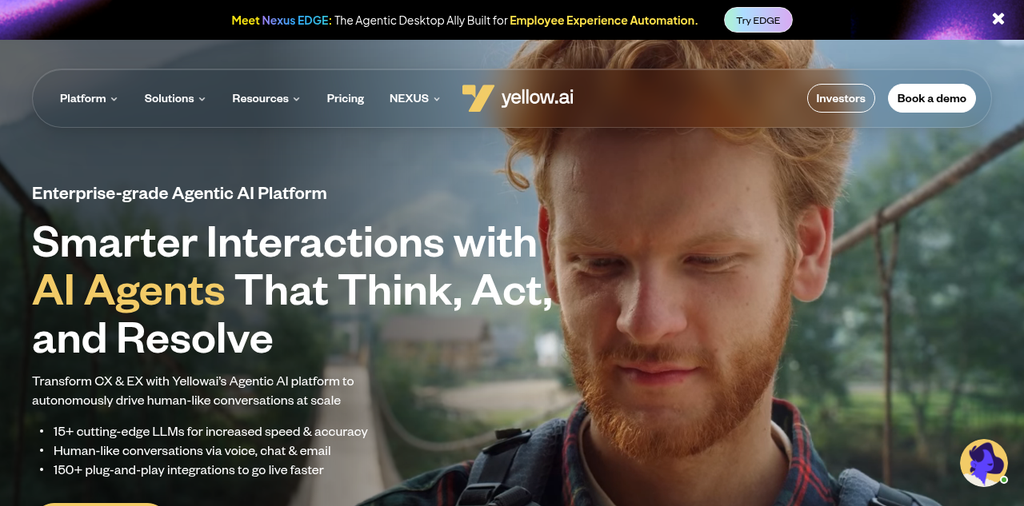
Yellow.ai automates customer and employee conversations across many channels and languages, with a strong footprint in India and other multilingual markets. Gartner placed it as a Challenger in its 2025 Magic Quadrant for Conversational AI Platforms.
The company also agreed in August 2026 to go public through a $550 million merger with Bluerock Acquisition Corp. That could bring funding and scrutiny in equal measure. For context on where vendors like this are heading, see our AI tool predictions for 2026.
- Best for: Multilingual commerce and support across many channels
- Limitation: Voice depth is weaker, and its 2026 analyst standing is less clear
5. Twilio
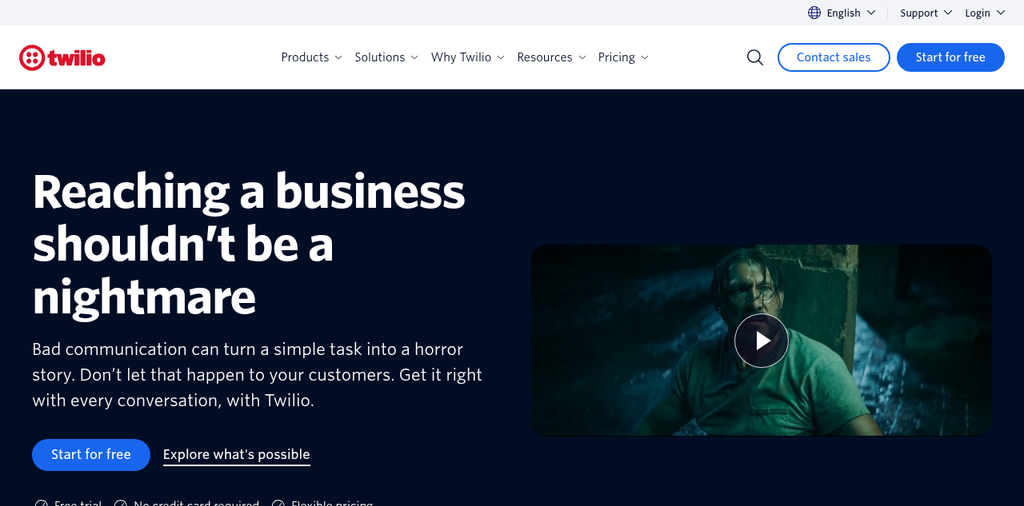
Twilio is infrastructure first. Developers use its APIs to build exactly the agent they want, and ConversationRelay connects live voice calls to large language model agents. Its FY2025 annual report shows the scale: $5.1 billion in revenue, up 14%. On its Q4 2025 earnings call, the company said voice AI revenue grew more than 60% year over year.
You get freedom, but you also do the assembly. Dialogue design, guardrails, analytics and human handoff are largely yours to build, which suits teams with engineers to spare.
- Best for: Engineering teams building custom agents
- Limitation: It’s a toolkit, not a finished agent product
6. Google Cloud Conversational Agents
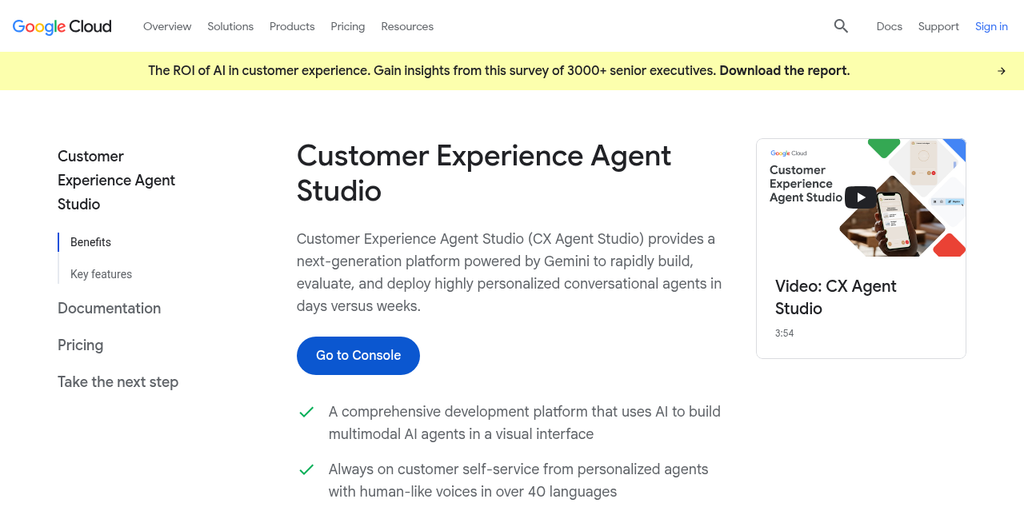
Google’s offering grew out of Dialogflow. The unified Conversational Agents console reached general availability in March 2025, combining generative and rules-based agents, and the older Dialogflow CX console was retired on 31 October 2025. Google has since folded the product into its Customer Engagement Suite and Gemini Enterprise branding.
If your data and models already live in Google Cloud, it’s a natural fit. Teams comparing it with other automation options may find our best AI automation tools roundup useful.
- Best for: Teams already invested in Google Cloud and Gemini
- Limitation: Frequent renames and migrations create maintenance churn
How to Choose
Match the platform to the job:
- Messaging across many channels: Infobip
- Regulated, large-scale builds: Kore.ai
- Voice-heavy contact centers: Cognigy
- Multilingual customer experience: Yellow.ai
- Custom developer builds: Twilio
- Google Cloud stack: Google Cloud Conversational Agents
Compliance deserves a place in that shortlist. The European Commission’s Article 50 guidance says people must be told when they’re talking to an AI system, and the rule has applied since 2 August 2026. Any platform that can’t show a clear disclosure flow is a risk if you serve European customers.
Conclusion
No single platform wins every scenario. Pick the one that matches your channels and your team’s skills, then pilot it on one narrow use case before scaling. A platform that fits your workflow beats one with the longest feature list.